logo


advertisement
subscribe

advertisement

advertisement

Columns

baxter_black

nelson_brad

mechanics_corner

Silage Season

Latest comments

  1. Re: New website makes finding, listing pasture leases easy

    Posted on Saturday, 04 May 2013 by Bill Strobey.

    Need cattle lease in Hayes, Blanco, or Burnet counties.

  2. Re: Where is this winner!

    Posted on Friday, 26 April 2013 by FG Editor.

    Some good guesses! Thank you all for playing along. Kyle Dodge is...

  3. Re: Where is this? April 2013

    Posted on Tuesday, 16 April 2013 by scott.

    Round valley utah

  4. Re: Multi-paddock grazing is superior to continuous grazing

    Posted on Tuesday, 16 April 2013 by Bob Kinford.

    One of the "drawbacks" to having more paddocks is the cost of...

Feed
image image image
Managing your risk of hay fires
Spring winds, unwelcome frosts and the occasional rainstorm have been reminding us that crop season is upon us once again.
Focus on forages, conservation sustains family ranch’s future
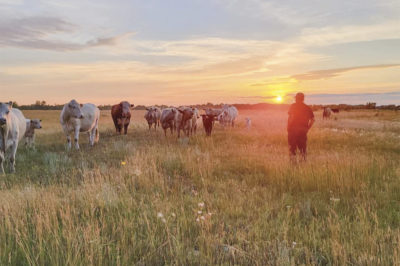
Driving through parts of northeastern South Dakota, you are likely to run across more corn and soybeans than cattle, except that is, until you get near Kopriva Angus in Raymond, South Dakota.
Growing into business
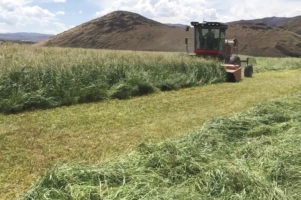
Standing on this domed stretch of Leep family land, you can see mountains in every direction – tall peaks, some reaching two miles above sea level.
When the storm hits: Pasture recovery from tough weather PDF Print E-mail
Wednesday, 15 May 2013 09:27


0513fg_newman_1Many producers throughout the country keep enduring tough weather conditions.

In the last five years, the region has experienced five different records or near-records for the last 40 years.

We have faced the driest, the wettest and the warmest fall, the coldest spring and the most extreme winter-spring temperature changes.

Read more...
 
The Perfect Stack PDF Print E-mail

0513fg_torres_4About me
My name is Tulsa Torres-Moe, and I am 14 years old in 8th grade at Belle Fourche Middle School in South Dakota.

I live on a ranch where we raise hay and cattle.

At our recent science fair, I did a project called ‘The Perfect Stack’.

It was about the best way to stack hay to create the most amount of runoff.

Many farmers in this area were impressed with and interested in my project. I explained to them how it worked, and why the winning hay stack was the best choice.

Read more...
 
Winter annual small grains: Filling the silage gap PDF Print E-mail
Wednesday, 15 May 2013 07:04


0513fg_marsalis_2Small-grain crops are used extensively in some areas for various types of forage production and animal feeding operations.

Small grains used to the greatest extent are wheat and triticale; however, rye, barley and oats are utilized also.

All of these species have the potential to fill gaps between summer crops to supply year-round, high-quality feed to meet the constant and high nutritional demands of lactating dairy cows.

Read more...
 
Alfalfa quality, yield, productivity: Do you have to choose? PDF Print E-mail
Wednesday, 15 May 2013 10:08


When it comes to alfalfa, many growers believe they have to choose quality, yield or productivity and that increasing one element will automatically reduce the others.

Fortunately, you don’t have to trade one for the other, if you keep a few fundamentals in mind:

Cut later. Many recent studies have shown the best time of day to cut alfalfa to achieve maximum quality is in the afternoon.

Read more...
 
Forage harvester knife maintenance PDF Print E-mail
Wednesday, 15 May 2013 06:55


The economical use of original high-quality cutting components and wear parts can be considerably improved by proper maintenance and handling.

The available performance potential of the entire machine is negatively influenced by inadequate maintenance and handling.

In the agricultural sector, chopping and harvesting are the tasks which require the most energy. Chopping corn and wilted grass are on top of the list.

Read more...
 
A perennial forage with the potential to revitalize rangeland PDF Print E-mail


koshia_researchPervasive cheatgrass has long posed a threat to ranchers and their communities in the intermountain West.

Edging out native perennials and taking over entire rangelands, the annual weed compromises forage value for livestock, destabilizes soil, increases risk of wildfire and diminishes wildlife habitat.

Read more...


advertisement

About Us | Subscribe | Advertise | Contribute | Contact Us | Industry Stats | Progressive Dairyman | Progressive Cattleman

Copyright 2013 Progressive Forage Grower

This site is optimized to be viewed with Firefox, Safari and Internet Explorer 8 web browsers.

pp_logo_k_0910